Sivobluy
Doctor ZhivagoSivobluy is a young partisan bodyguard whose position beside the commander makes him appear a figure of unquestioning loyalty, yet that intimacy conceals a double role. Known as “The Hetman’s Ear,” he is ultimately disclosed as an agent provocateur who helps uncover a conspiracy against the partisan leader; at the conspirators’ execution, a condemned man fires at him, and the prisoners denounce him as a traitor to every side to which he has sworn allegiance.
Position and Appearance
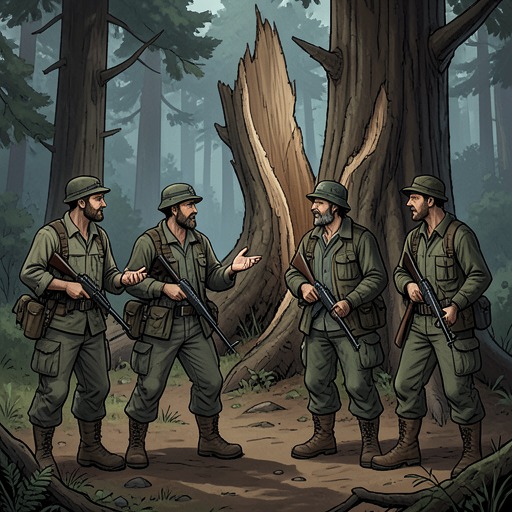
Sivobluy belongs to the silent pair of bodyguards who stand beside the young commander of the Kezhemsk group of the trans-Ural partisan units. The guards are described as the commander’s own age, dressed in white sheepskins whose lamb’s-wool edging has grown gray. Their handsome, stony faces communicate no response to the political discussion around them: they neither speak nor smile, and their stillness registers as blind loyalty and readiness to act for their chief.
That public image places Sivobluy close to the center of partisan authority without making him a speaker or an apparent political actor. He is one of the commander’s trusted favorites, a member of the crack Silver Company, and is known to be in the chief’s confidence. His nickname, “The Hetman’s Ear,” suggests privileged access: the bodyguard is imagined as the leader’s listening instrument, a position that makes his later secret participation in a plot especially unsettling.
The Conspiracy and Its Exposure
During a night conversation, Yurii Andreievich overhears a secret plan being discussed by partisans and delegates from the enemy’s forward positions. Among the familiar voices are Goshka, Sanka, Koska, Terentii Galuzin, and Zakhar Gorazdykh. Sivobluy’s presence surprises Yurii: as a trusted Silver Company partisan and one of the commander’s bodyguards, he seems to belong to the inner circle rather than to the disorderly group implicated in the plot.
The conspirators are negotiating with enemy delegates, and Yurii understands that they intend to hand Liberius over to the Whites or kill him. He considers warning the commander and Liberius, but by the time he returns, Kamennodvorsky has gone. The plot nevertheless does not succeed: its details are disclosed and the conspirators are seized. Sivobluy’s part is then revealed. He has acted as an agent provocateur, helping expose the conspiracy from within. The disclosure does not reassure Yurii; it deepens his disgust, since Sivobluy’s double position makes apparent loyalty inseparable from covert manipulation.
The Execution and the Accusation of Betrayal
Sivobluy reappears at the execution of the captured conspirators, where his role as a guard places him on the side of those carrying out the punishment. The condemned have been imprisoned and mistreated until they have lost their human appearance. During the march, Rzhanitsky, an old anarchist and friend of Vdovichenko, suddenly fires three shots at the guards, aiming at Sivobluy. His hand shakes and he misses. Rather than immediately overwhelm or shoot him, the guards hesitate out of tactfulness and pity for their former comrades.
Rzhanitsky still has three bullets, but, maddened by the failed attack or forgetting what remains in the revolver, he hurls his Browning against the rocks. It fires again and wounds Pachkolia in the foot. The injured prisoner’s screams set off a wider collapse of restraint: the condemned beg, pray, curse, and plead for mercy as they are driven toward the rocks. Sivobluy becomes the target of their fury. They call him “Judas” and a “Christ-killer,” accuse him of betraying both his lawful Tsar and the comrades to whom he had sworn loyalty, and warn that he will betray the commander too.
Significance
Sivobluy’s brief appearances trace a sharp reversal in what loyalty looks like. First he is one of two mute, stone-faced guards whose apparent devotion to the commander is embodied in their posture and silence. Then the narrative reveals that this trusted insider has taken part in exposing a conspiracy against that same leader. At the execution, the condemned interpret this intervention not as neutral service but as betrayal layered upon betrayal: Sivobluy has served a sovereign, comrades, and a chief, and in their eyes has broken faith with each.
The nickname “The Hetman’s Ear” captures the ambiguity of his position. It associates him with access and trust, but an ear is also a concealed witness, able to receive information without openly entering the conversation. Sivobluy’s silence beside the commander thus acquires a double meaning: it signifies disciplined allegiance, while the later disclosure shows that the silent bodyguard has been acting inside a dangerous web of surveillance and deceit. The scene does not resolve his fate, but it makes him a focus for the novel’s recurring uncertainty about political loyalty in a world where former allies become guards, informers, conspirators, and executioners.